United States
Why traditional B2B lead generation is changing and what comes next
For years, lead generation has been a mainstay of B2B marketing. Put content behind a form, persuade someone to download it and pass their details to sales. Cost per lead (CPL) became the measure of success, and for many marketing departments, it still is. But I think we've reached a point where we're confusing the cost of a lead with its value...
For years, lead generation has been a mainstay of B2B marketing. Put content behind a form, persuade someone to download it and pass their details to sales. Cost per lead (CPL) became the measure of success, and for many marketing departments, it still is. But I think we've reached a point where we're confusing the cost of a lead with its value.
We spend an enormous amount of time defining ideal customer profiles (ICPs), often based on company size, job title, geography and employee numbers. In many cases, these requirements have more to do with how a supplier organises its sales teams or prices its products than how customers actually buy. Of course, businesses need to know who they want to sell to, but just because someone fits an ICP doesn't mean they're interested in buying. Equally, someone actively researching a problem might be excluded because they don't tick the right boxes. Yet we're still judging campaigns by how many leads they deliver and how cheaply they can deliver them.
Why are B2B content downloads and form fills declining?
Quite a lot has changed, and not necessarily for the better. Marketing teams are smaller, budgets are tighter and staff turnover has been extraordinary. At HR Grapevine, our research team tracks appointments and departures across marketing departments within the HR supplier community. Over the past 24 months, we've recorded 46% turnover, the highest level we've seen. That's a huge amount of knowledge and experience walking out of the door, and with smaller teams and less money for content, it's hardly surprising campaign performance is under pressure.
But the bigger change is how people consume information. Readers expect to research without barriers. They want to understand a problem, explore the market and consider solutions without handing over their details every time something interests them. We can see this in our own campaign data. Over the past two years, growing numbers of readers have arrived on landing pages, including people who meet a client's exact ICP, but chosen not to download the content. The impact is significant. The number of emails needed to fulfil traditional lead-generation campaigns has quadrupled, and that's neither sustainable nor good marketing. Repeatedly emailing people in the hope that they'll eventually complete a form does little for a supplier's brand.
AI has made information easier to find, but I don't believe it's the main problem. Readers expect to educate themselves before entering a sales process, yet we're putting forms in front of them too early. A form should be a step forward in the buying journey, not the price of admission. Case studies, product information and general market insights should be freely available. They're there to educate readers, demonstrate expertise and build trust, not to generate a lead every time someone shows an interest.
If we're asking someone to exchange their details, the content had better be worth it. Original research, proprietary data and genuinely valuable insights that readers cannot easily find elsewhere offer a reason to complete a form. The content needs to help solve a business-critical problem, not simply provide another overview of the market. With so much information freely available, the value of that exchange has to be clear.
There's also a skills issue. With so much movement in marketing teams, we've seen people enter B2B from B2C backgrounds. The job titles might be the same, but the buying process is very different. B2B decisions can take months, sometimes years, and involve people who influence a purchase but never sign the contract. Yet many campaigns still focus on capturing a narrow group of decision-makers, overlooking those who may be shaping the buying process long before a supplier is shortlisted.
Why audience engagement matters more than lead volume
One advantage of running HR Grapevine is seeing what our audience is actually interested in, and some of the most interesting readers aren't necessarily those a supplier has included in its ICP. If people are researching your market, reading about the problems your product solves and returning to explore the subject, why ignore them because they fall outside a sales territory or headcount requirement? Surely it makes more sense to respond to what potential customers are doing rather than trying to fit them into predetermined categories.
We track what we call engagement signals, showing when readers spend time with content and return to related subjects. Some call this intent data, but I'm not convinced that's the right description. Someone reading three articles about an HR challenge isn't necessarily buying tomorrow. They might be researching, preparing a business case or advising colleagues, but that interest is still valuable. If you wait until someone is ready to buy, there's a good chance they've already researched the market and decided which suppliers to approach. The opportunity is to reach people earlier, while they're still forming opinions.
How Pipeline Acceleration turns audience engagement into future demand
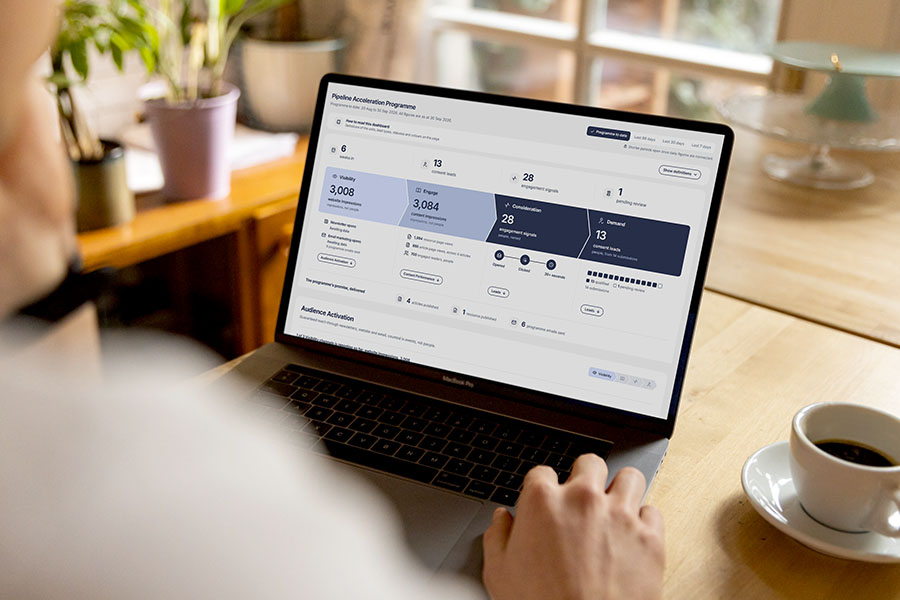
We've changed our approach because the old model no longer reflects how people research and buy. Our website gives us more than page impressions. We can distinguish between someone who leaves immediately and someone who spends time engaging with content. These engagement signals have value, but they're not sales-ready leads. Readers don't necessarily want a phone call, and treating them as if they've requested one could do more harm than good. They're people showing interest, and that's where marketers should start.
Pipeline Acceleration brings together the different stages of demand generation rather than treating each download as an isolated transaction. We use HR Grapevine's brand and newsletters to build awareness, freely accessible client case studies to demonstrate expertise and relevant content to nurture interest. Where suppliers invest in original research, proprietary data or genuinely valuable insights, form fills can still generate consent-based leads. But they're one part of the campaign, not the whole objective.
We've also changed how we use email. Our newsletters introduce content to an established HR audience, while targeted solus emails reconnect readers who've engaged with the campaign, alongside others demonstrating interest in the subject. We cap how often we email them because I don't believe publishers should promise unlimited email activity to reach arbitrary lead targets. It's not good for readers or the client's brand.
Suppliers also have to take responsibility for the results. If you want people to engage, give them a reason. Invest in credible case studies, original insights and content demonstrating what your product can achieve. We can put that content in front of the right people and help develop their interest, but the content itself still has to do the work.
The future of B2B lead generation: Developing demand, not just capturing leads
I think we need to change the question we're asking. Instead of starting with how many leads a campaign will deliver, we should be asking how early we can identify people interested in the problems our products solve. They might not buy this month or even this year, but they're researching, learning and forming opinions, and they're worth investing in.
Marketing's job is to become part of that journey, not wait until the end and hope to make the shortlist. That doesn't mean abandoning ICPs or form fills. Both have a place, but neither should dictate the entire strategy. For me, the future of lead generation is about recognising interest early, giving people good reasons to keep engaging and understanding how that interest develops over time. We need to stop thinking only about how many leads we can deliver and start thinking about how much demand we can develop.